Selsun Blue vs Nizoral: Selenium Sulfide or Ketoconazole?
Published 2026-04-09 · Last updated 10 November 2026
Short answer: The main difference is the active ingredient: selenium sulfide 1% in Selsun Blue, ketoconazole 1% in Nizoral. The labels also differ on frequency: Selsun Blue says at least twice a week, while Nizoral says every 3 to 4 days for up to 8 weeks, then only as needed. The article says Selsun Blue is the more affordable option with more formulas, and suggests asking a healthcare professional which suits your scalp.
Quick verdict
The article doesn't name a single winner: it says the choice depends on your needs. Selsun Blue (selenium sulfide) is the more affordable, more versatile pick with more formula options. Nizoral (ketoconazole) is priced higher and comes in Classic and Fragrance-free versions.
Summary based on the full article below.
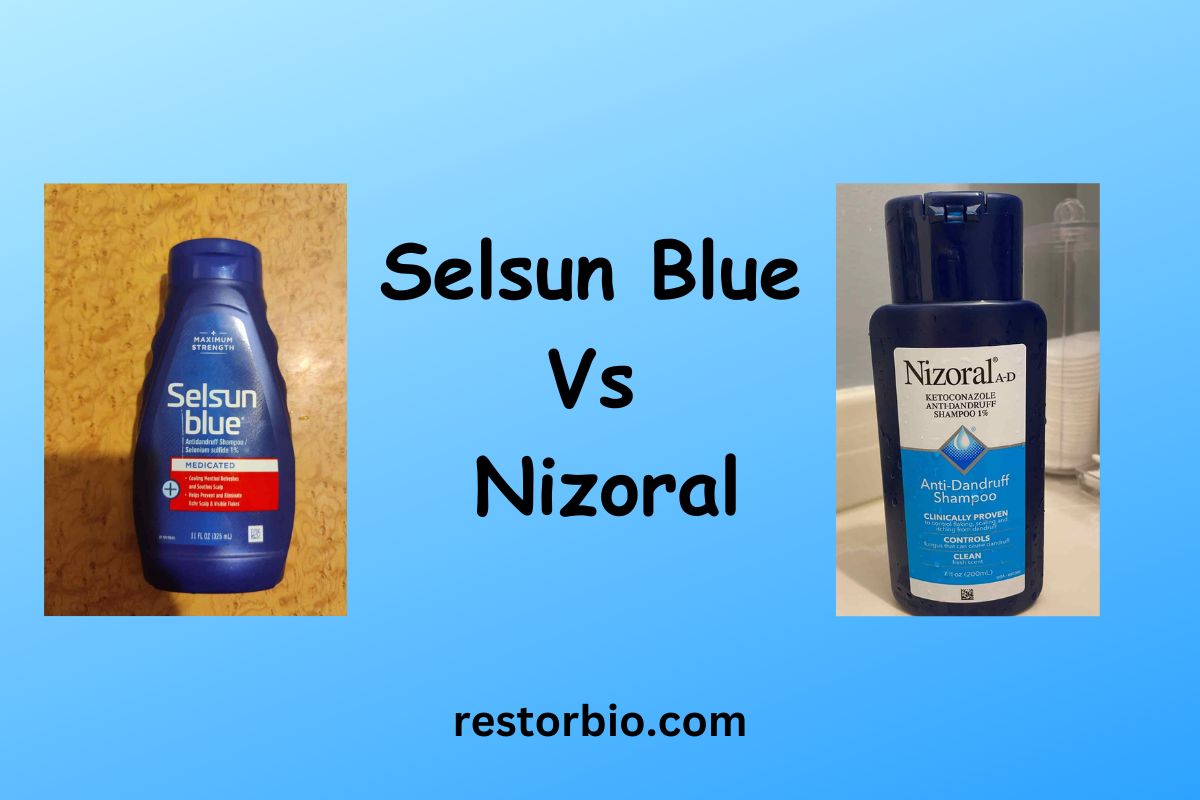
Selsun Blue vs Nizoral: key differences
| Feature | Selsun Blue | Nizoral |
|---|---|---|
| Active ingredient | Selenium sulfide (1%) | Ketoconazole (1%) |
| How often (Drug Facts label) | At least twice a week, or as directed by a doctor | Every 3 to 4 days for up to 8 weeks, then only as needed |
| Formula options | Classic, Moisturizing, Sensitive Scalp | Classic, Fragrance-free |
| Price point | More affordable | Moderately priced (higher) |
| Over the counter | Yes | Yes |
Head & Shoulders vs Selsun Blue vs Nizoral: what the labels say
All three are over-the-counter anti-dandruff shampoos sold in the US, and each has a Drug Facts label. The table below copies the key lines from each label, for one standard version of each product, so you can compare them side by side.
| Drug Facts item | Head & Shoulders Classic Clean | Selsun Blue Medicated | Nizoral Anti-Dandruff |
|---|---|---|---|
| Active ingredient | Pyrithione zinc 1% | Selenium sulfide 1% | Ketoconazole 1% |
| Use (label wording) | "Helps prevent recurrence of flaking and itching associated with dandruff" | "Fights and helps prevent recurrence of flaking and itching due to dandruff" | "Controls flaking, scaling and itching associated with dandruff" |
| How often (label) | At least twice a week or as directed by a doctor; for maximum dandruff control, every time you shampoo | At least twice a week or as directed by a doctor | Adults and children 12+: every 3 to 4 days for up to 8 weeks or as directed by a doctor, then only as needed. Children under 12: ask a doctor |
| Stop use and ask a doctor if (label) | The condition worsens or does not improve after regular use as directed | The condition worsens or does not improve after regular use as directed | A rash appears, or the condition worsens or does not improve in 2 to 4 weeks |
| Other label notes | For external use only; avoid contact with eyes | For external use only; avoid contact with eyes | Do not use on a scalp that is broken or inflamed; if pregnant or breast-feeding, ask a doctor before use |
| Label source | DailyMed · brand page | DailyMed · brand page | DailyMed · brand site |
Labels checked on 10 Nov 2026. Other versions of each brand can have different directions, so read the label on the bottle you buy. It describes the products and their labels; it isn't a diagnosis or a treatment recommendation. Ask a pharmacist or doctor about your own scalp.
Compare the other two pairs: Head & Shoulders vs Selsun Blue · Head & Shoulders vs Nizoral.
One of the most common problems that people face is dandruff. There are many different products on the market that promise to eliminate dandruff, but it can be difficult to tell which of these Selsun Blue Vs Nizoral actually work.
The Selsun Blue shampoo has been around for years, but it has recently been reformulated to be both stronger and gentler on your scalp.
However, the Nizoral dandruff shampoo is a newcomer to the market and has already made a splash with its powerful formula that can help you get rid of dandruff in just three days! So which one should you choose? Let's find out!
Both Selsun and Nizoral is the top brands if you want hair care products to reduce dandruff and scalp issues. Here are some top products from both these brands that you can use depending on your hair and scalp type:
|
Best Selsun Blue & Nizoral Products |
Top Ingredients |
Best For |
|
Selenium Sulfide 1%, Aloe |
Dry Scalp & Hair |
|
|
Pyrithione Zinc 1% |
Sensitive Scalp |
|
|
Coco Betaine |
Dry Scalp/Colored Hair |
|
|
Mint and Tea Tree Oil |
Itchy Scalp |
|
|
1% Ketoconazole |
Dermatitis, Eczema and Dandruff |
Selsun Blue Vs Nizoral: Overview
When it comes to treating dandruff, two popular options are Selsun Blue and Nizoral. Both shampoos promise to alleviate the itching, flaking, and irritation associated with this common scalp condition. In this overview, we'll compare the key features, ingredients, and effectiveness of Selsun Blue and Nizoral to help you decide which one is right for you.
About Selsun Blue
Get it HereSelsun Blue, a popular dandruff shampoo, has been providing relief from flaking, itching, and irritation for decades.
These include moisturizing, medicated, and 2-in-1 options that provide tailored solutions for users.
However, it's essential to note that Selsun Blue may require consistent use for optimal results, as stopping its usage can potentially lead to the recurrence of dandruff. With its proven track record and commitment to addressing various hair and scalp needs, Selsun Blue remains a trusted choice for those looking to combat dandruff and maintain a healthy scalp.
About Nizoral
Get it HereAs a result, many individuals have incorporated Nizoral shampoo into their hair care routines, using it in conjunction with other treatments to promote a healthy scalp and hair growth.
Selsun Blue Vs Nizoral Review
Look no further, as today we'll be diving into an in-depth comparison between two of the most popular and highly effective anti-dandruff shampoos on the market: Selsun Blue and Nizoral. Both boasting impressive success rates and a multitude of loyal users, these shampoos have become household names in the world of scalp care.
In this topic, we'll explore the key differences, benefits, and potential drawbacks of each product, helping you make an informed decision about which shampoo is best suited for your specific needs. So, without further ado, let's embark on this journey towards a healthier, dandruff-free scalp with our ultimate Selsun Blue vs. Nizoral showdown!
Selsun Blue Review
Get it HereThat's when a friend recommended Selsun Blue.
While it may not be the perfect solution for everyone, it's certainly worth a try if you're struggling with dandruff and seeking an effective remedy. Just be prepared for the scent and give your scalp time to adjust. Good luck on your journey to a dandruff-free life!
Nizoral Review
Get it HereThen, during a conversation with a coworker about our shared dandruff woes, she recommended Nizoral.
If you have any concerns or experience any adverse reactions, it's essential to consult with a healthcare professional.
Just remember to follow the usage instructions and consult a healthcare professional if necessary. Here's to a flake-free life!
Which is Better: Selsun Blue or Nizoral?
When it comes to choosing between Selsun Blue and Nizoral, the decision ultimately depends on your individual needs and preferences. Both shampoos are highly effective in combating dandruff, but they work through different active ingredients - Selsun Blue utilizes selenium sulfide, while Nizoral contains ketoconazole. Selsun Blue offers a wider range of formulations to suit different scalp types and issues, making it a more versatile option.
On the other hand, Nizoral is known for its fresh scent and premium feel, which many users appreciate. In terms of effectiveness, both shampoos have a strong track record in reducing dandruff and providing relief from scalp itchiness. It's worth trying each product to determine which one works best for your specific scalp needs and delivers the results you desire in your pursuit of a dandruff-free life.
Comparison Between Selsun Blue Vs Nizoral
In this comprehensive comparison, we will delve into the key differences between Selsun Blue and Nizoral, examining their active ingredients, formulations and overall effectiveness, to help you make an informed decision in your quest for a flake-free life.
| Feature | Selsun Blue | Nizoral |
| Active Ingredient | Selenium sulfide (1%) | Ketoconazole (1%) |
| Product Category | Anti-dandruff shampoo | Anti-dandruff shampoo |
| Recommended Usage | – | Every 3 to 4 days for up to 8 weeks, then only as needed (Drug Facts label, adults and children 12+) |
| Targeted Condition | Dandruff (label use) | Dandruff (label use) |
| Key Benefits | – | – |
| Additional Advantages | Soothes itching and minimizes flaking | Alleviates itching, scaling, and flaking |
| Formula Options | Classic, Moisturizing, Sensitive Scalp | Classic, Fragrance-free |
| Price Point | $ (affordable) | $$ (moderately priced) |
| Availability | Drugstores, supermarkets, online retailers | Drugstores, supermarkets, online retailers |
| Over-the-Counter | Yes | Yes |
Selsun Blue Vs Nizoral Active Ingredients
Get it HereSelsun Blue and Nizoral are two popular anti-dandruff shampoos on the market, each with its own unique active ingredient designed to combat the pesky flakes and itchiness caused by dandruff. Selsun Blue's primary active ingredient is Selenium Sulfide, which works by slowing down the growth of yeast on the scalp and reducing excessive skin cell turnover.
Get it HereBoth Selsun Blue and Nizoral are well-known for their effectiveness, but the choice between them ultimately depends on individual needs, preferences, and the severity of the dandruff condition at hand.
Selsun Blue Vs Nizoral Recommended Usage
Get it HereOn frequency, the labels differ. The Selsun Blue Drug Facts label says to use it at least twice a week or as directed by a doctor. The Nizoral label says adults and children 12 and over can use it every 3 to 4 days for up to 8 weeks, or as directed by a doctor, and then only as needed.
Get it HereWhile both shampoos can provide relief from itching, flaking, and redness associated with these conditions, it is important to follow the recommended usage instructions and consider factors such as the severity of symptoms, individual scalp sensitivities, and the advice of a healthcare professional when choosing between Selsun Blue and Nizoral for the most effective and tailored treatment.
Selsun Blue Vs Nizoral Price and Availability
Get it HereWhen comparing the price and availability of Selsun Blue and Nizoral, it is worth noting that both anti-dandruff shampoos can be found in a wide range of drugstores, supermarkets, and online retailers, ensuring easy access for consumers. However, there are some differences in their pricing. Selsun Blue tends to be more affordable, with prices for an 11-ounce bottle typically ranging from $7 to $11, depending on the specific formulation and place of purchase.
Get it HereIn contrast, Nizoral, with its potent ketoconazole ingredient, is generally priced higher, with a 7-ounce bottle costing between $11 and $18. It is important to consider the frequency of use and the size of the bottle when evaluating the overall cost-effectiveness of each shampoo.
Conclusion: Selsun Blue Vs Nizoral
Ultimately, the choice between these two anti-dandruff shampoos depends on individual needs, scalp sensitivities, and the severity of symptoms. It is advisable to consult with a healthcare professional to determine the most suitable option for your specific condition, ensuring optimal results and a healthier scalp.
Read More:
Head and Shoulders Vs Selsun Blue
Pureology Vs Redken
Olaplex Vs Redken
Frequently asked questions
What is the difference between Selsun Blue and Nizoral?
The main difference is the active ingredient: Selsun Blue uses selenium sulfide and Nizoral uses ketoconazole.
Which is cheaper, Selsun Blue or Nizoral?
The article says Selsun Blue tends to be more affordable and Nizoral is generally priced higher.
How often do you use Selsun Blue or Nizoral?
Going by the Drug Facts labels: Selsun Blue at least twice a week or as directed by a doctor; Nizoral every 3 to 4 days for up to 8 weeks (adults and children 12 and over), then only as needed.
Which should I choose?
The article says it depends on your needs and scalp, and advises consulting a healthcare professional for your specific condition.
Related comparisons
- Selsun Blue vs Head and Shoulders: Which for Dandruff?
- Head and Shoulders vs Nizoral: Daily Zinc or Ketoconazole?
- TRESemmé vs Pantene Shampoo: Why Pantene Edges It
- Dove vs Pantene Shampoo: Which Is Better for Your Hair?
Looking for something else? Compare beauty products or try the pore-clogging ingredient checker.